
Last updated September 10, 2026
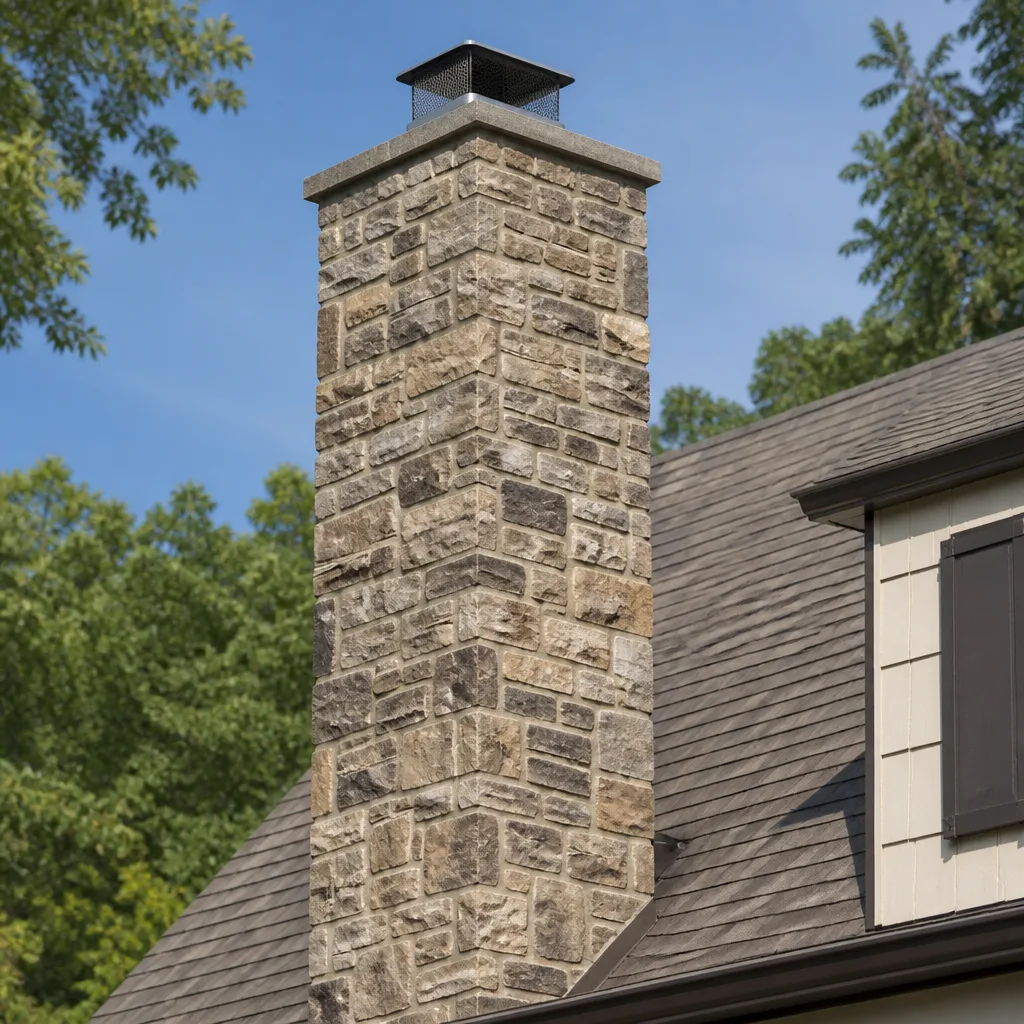
Level 1 sweep and inspection to the NFPA 211 annual standard - flue, crown, cap, and flashing checked and photographed
Chimney sweep logs do not sweep chimneys. They loosen some creosote - which then falls where a brush and vacuum still have to collect it.
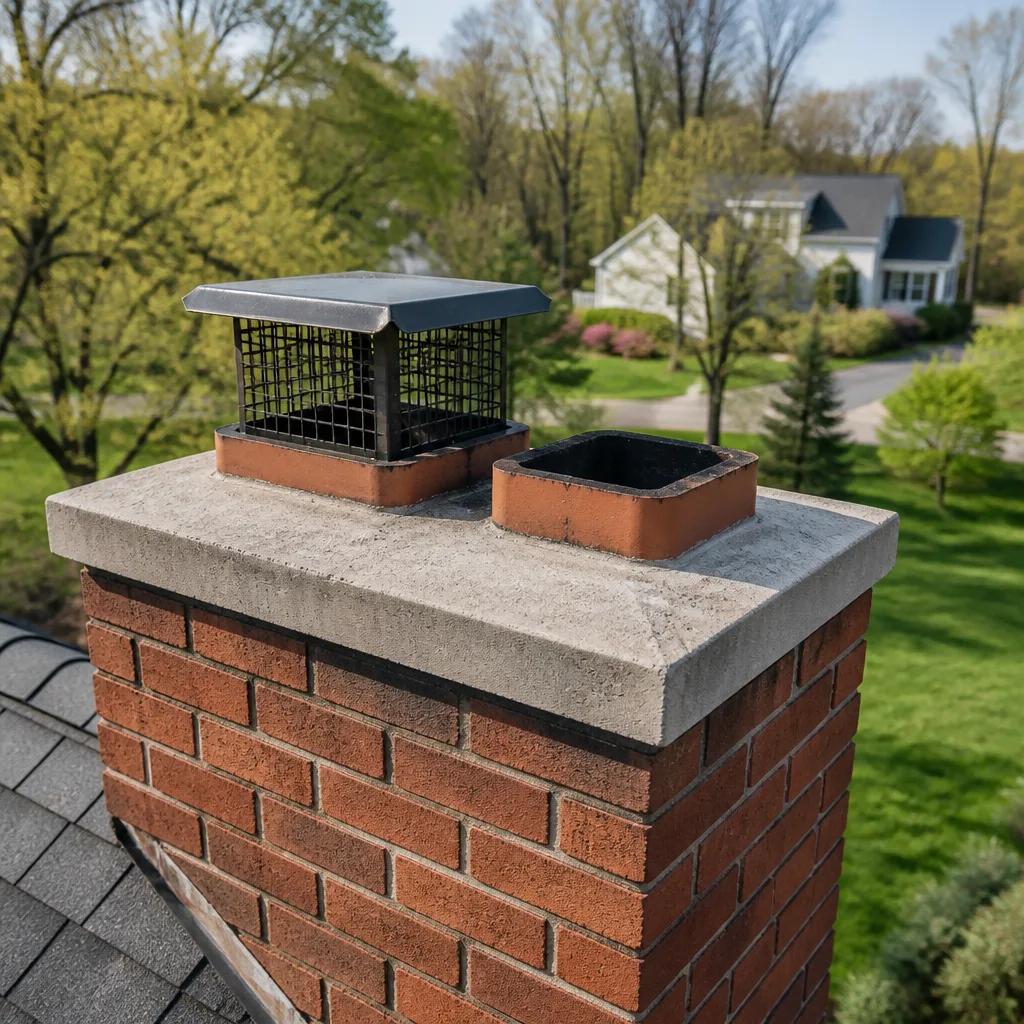
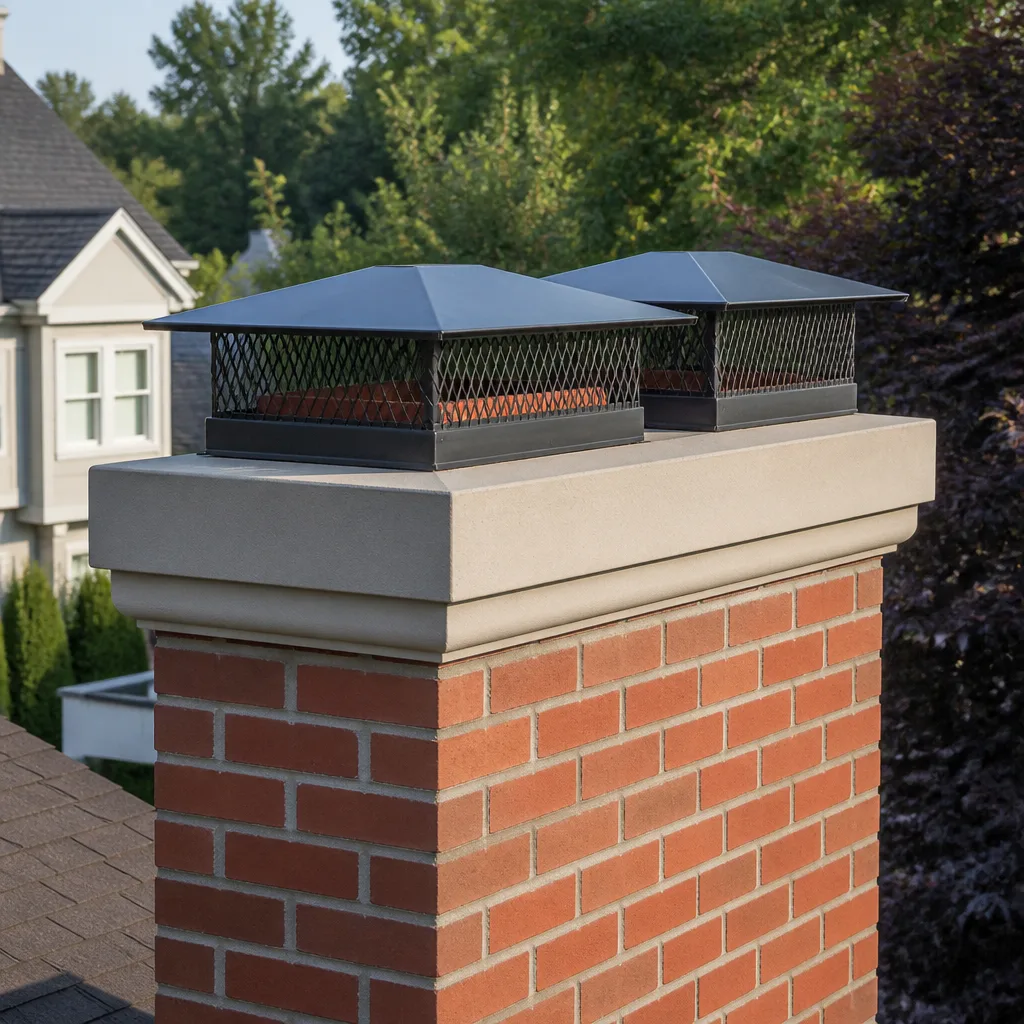
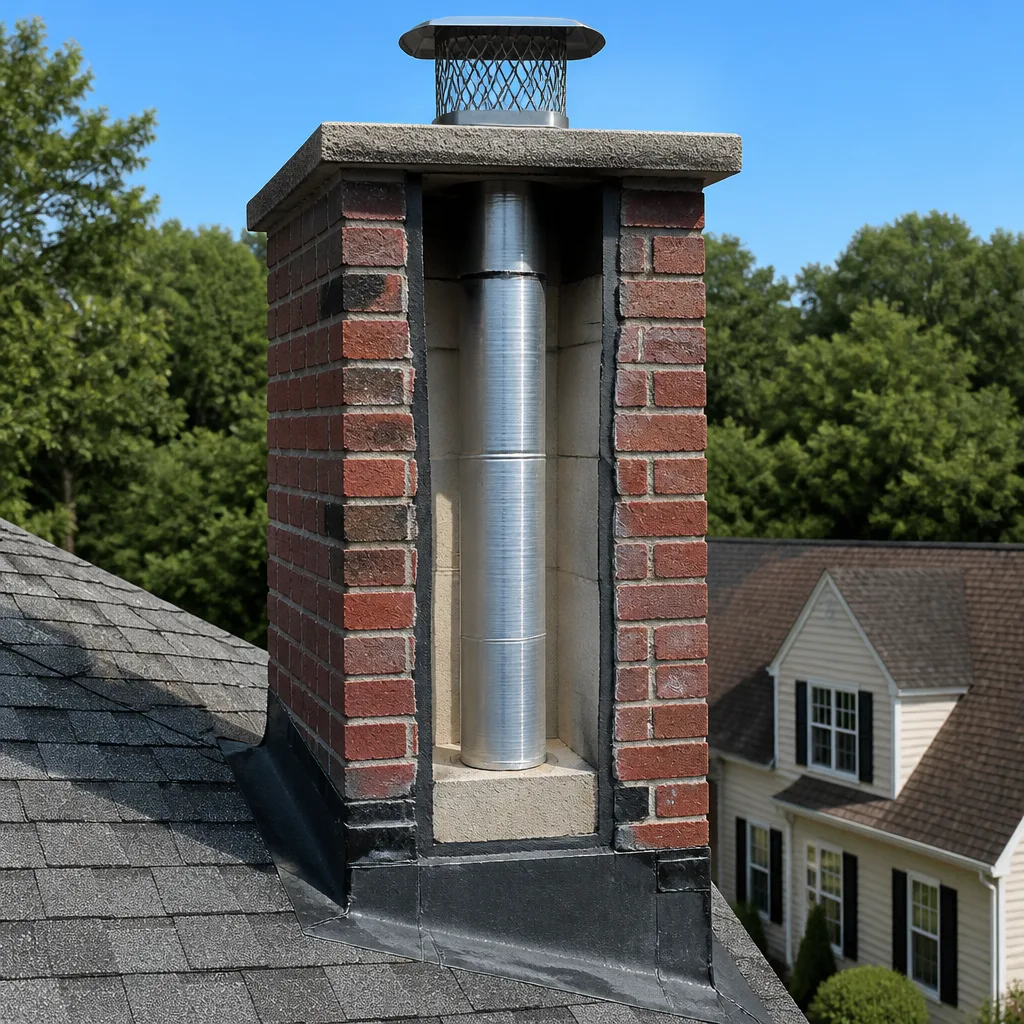
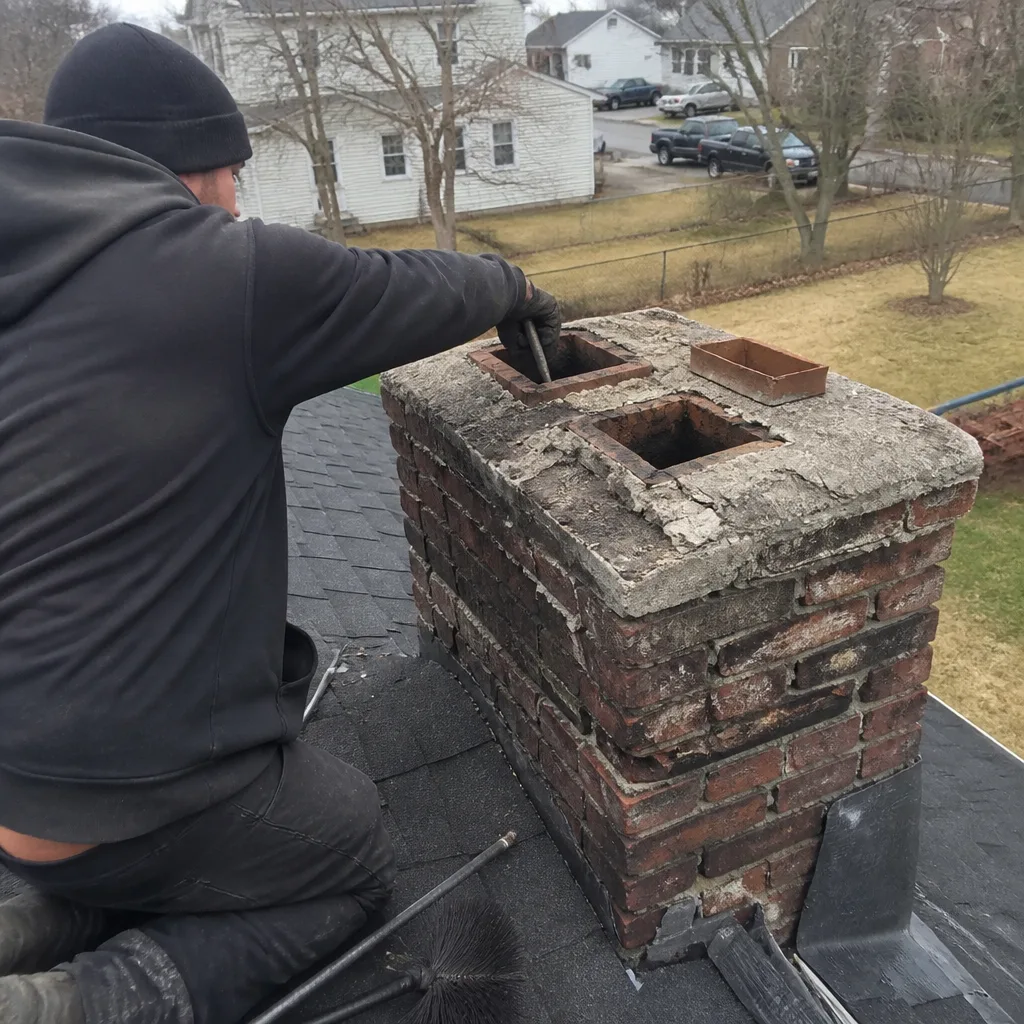 Before
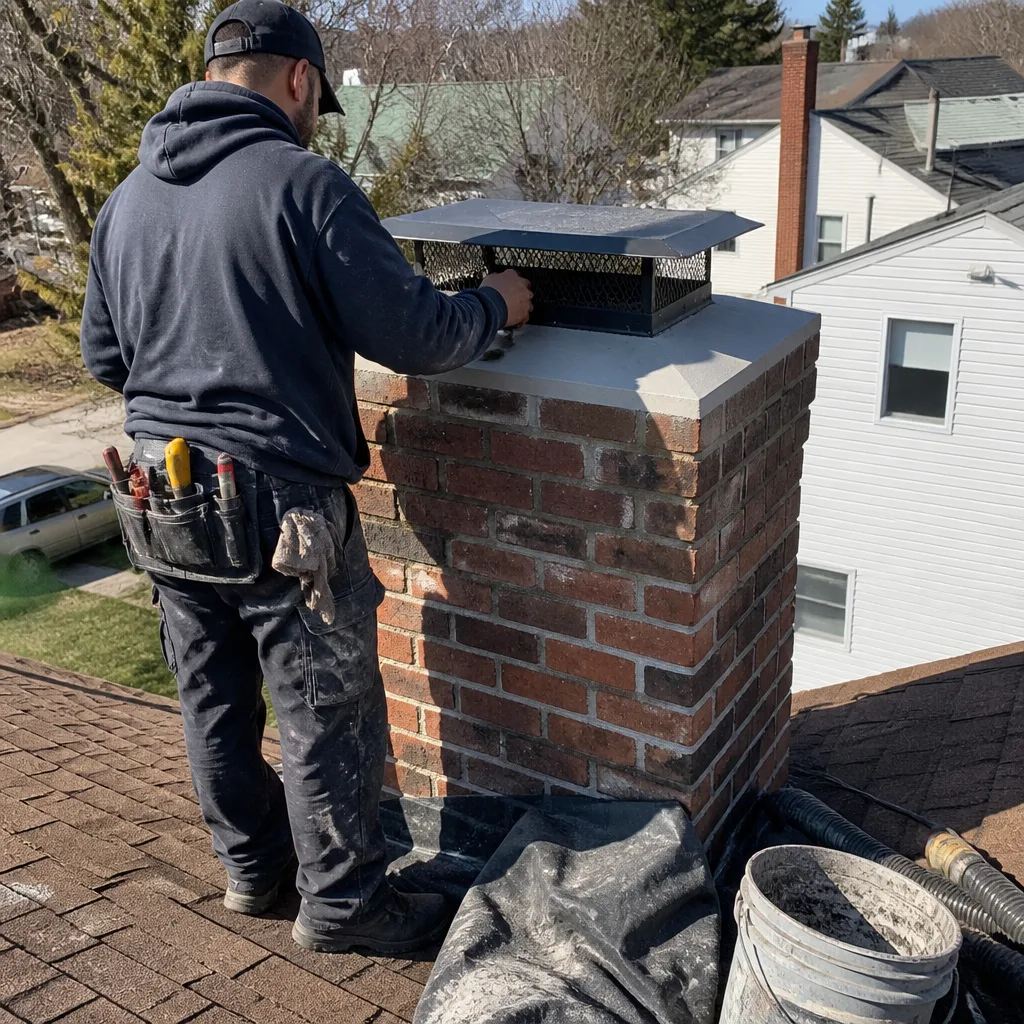 After
After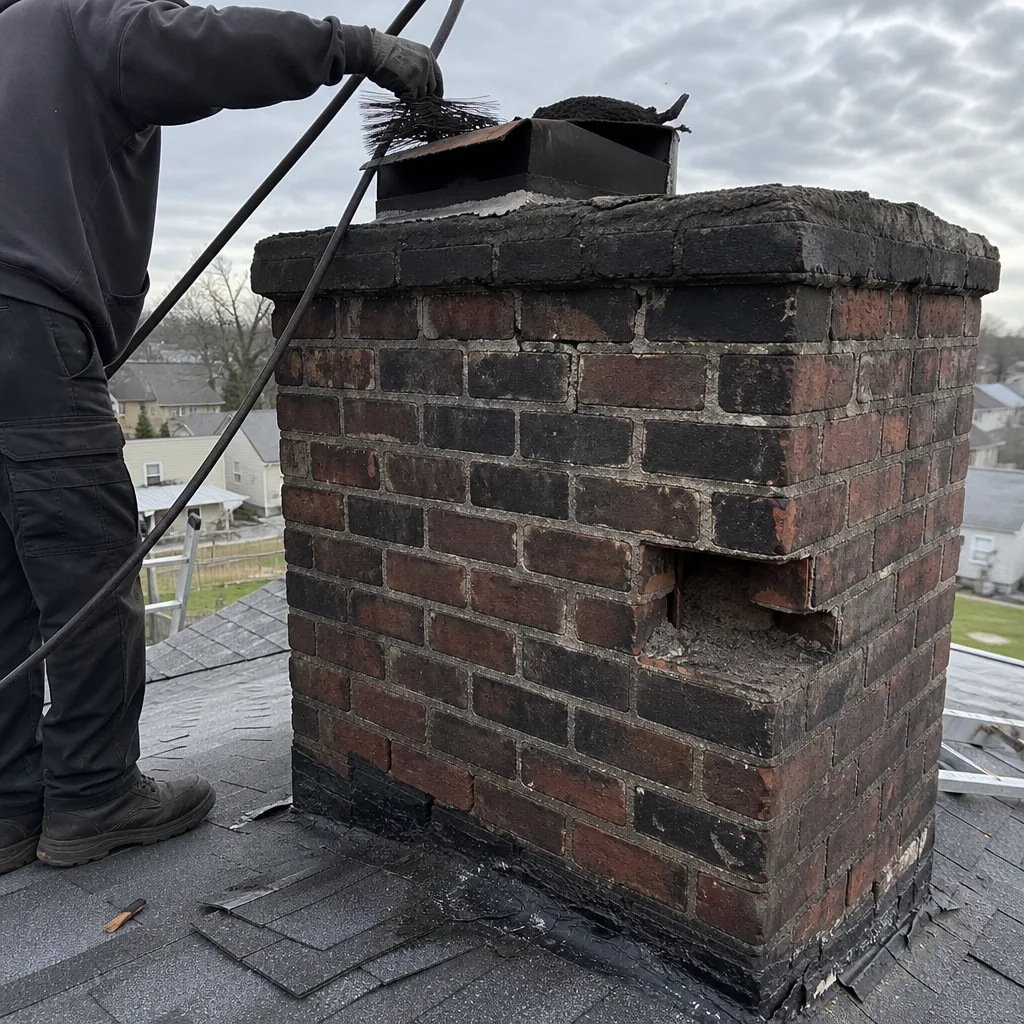 Before
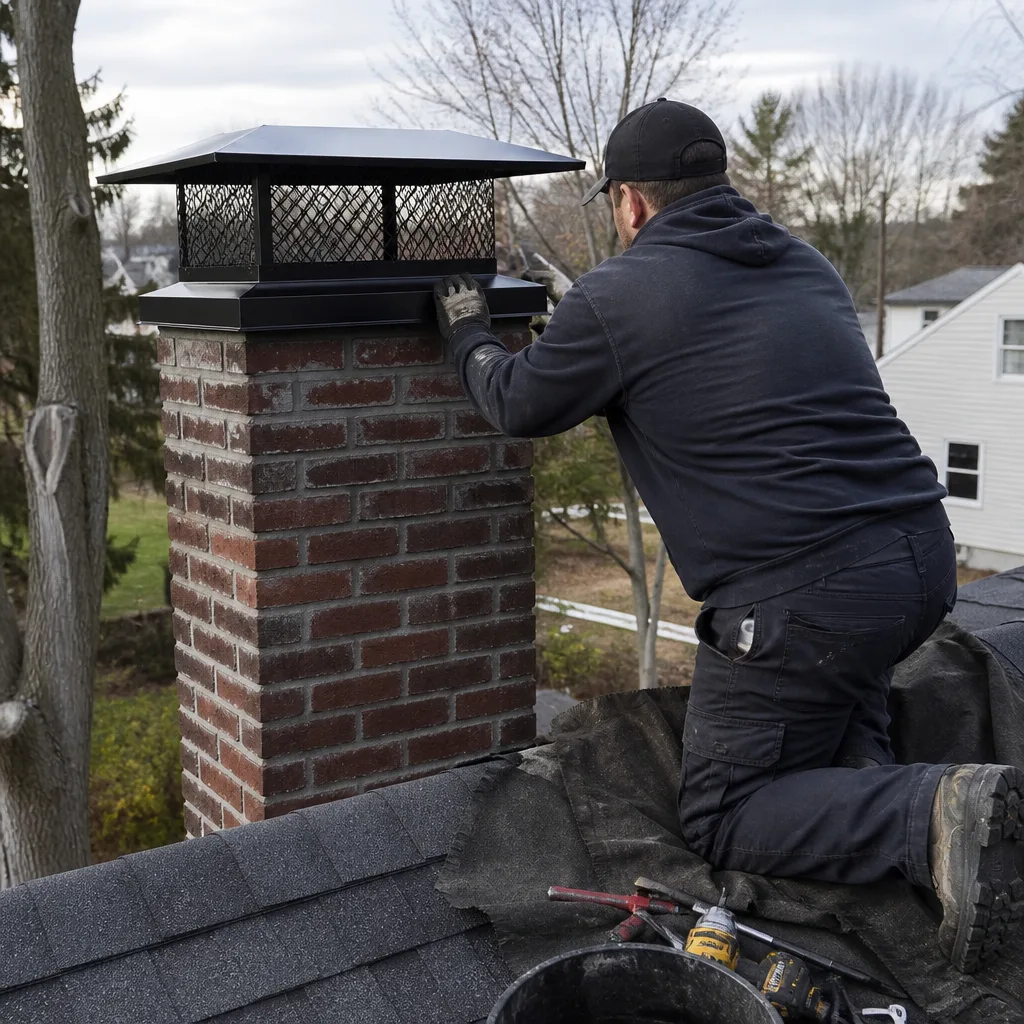 After
After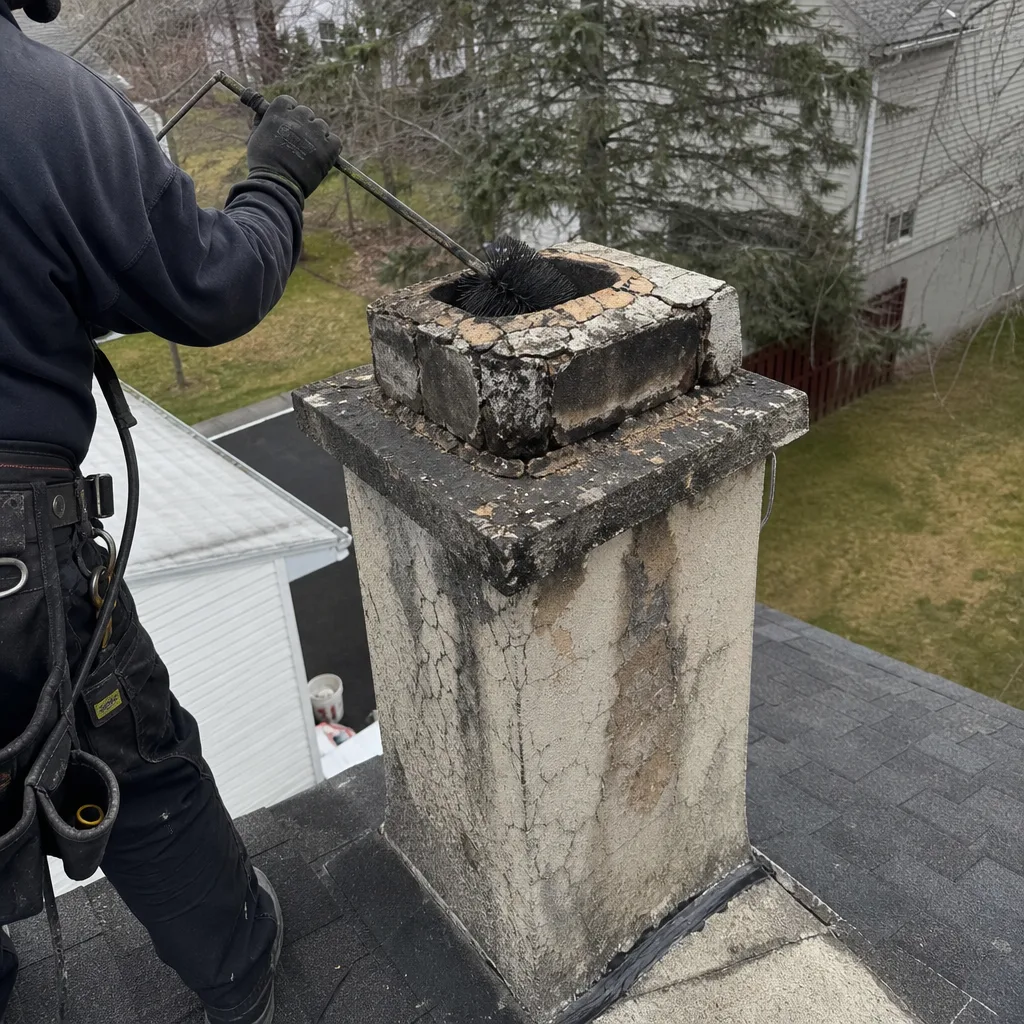 Before
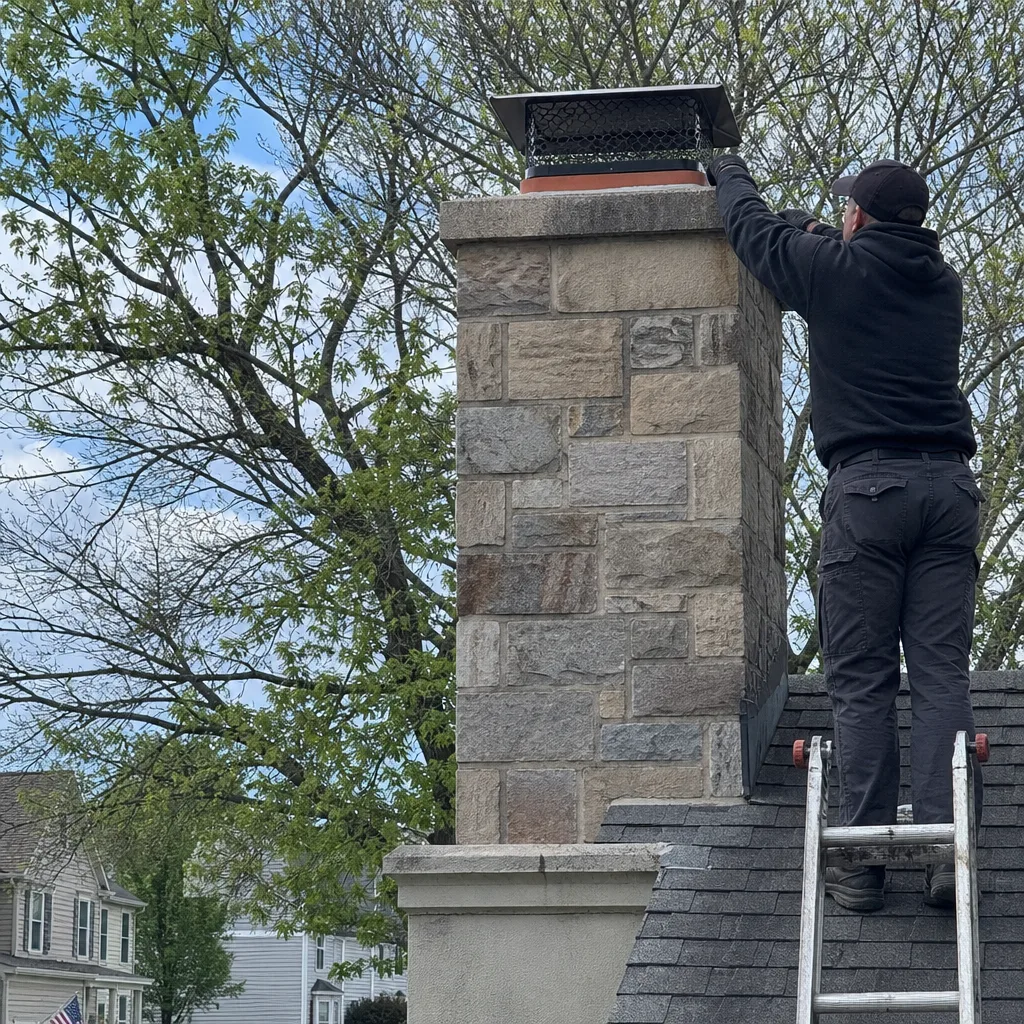 After
AfterChimney Cleaning Warning Signs: A Trenton Homeowner’s Reference Guide
A faint smoky smell on a windy day when no fire is burning is not a quirk of an old house. It is the chimney telling you the draft pressure relationship has changed, and that always has a cause worth finding. In Trenton, where the Delaware River valley creates unpredictable wind patterns and our housing stock spans from 19th-century Victorians in Mill Hill to post-war brick colonials in Villa Park, chimneys develop distinct personalities of failure. Most warning sign guides focus on dramatic collapses and chimney fires. This guide covers the quiet signals that precede them by months or years, because those are the ones you actually have time to act on. For more guides & resources, see our full collection.
Quick Answer
The most important chimney warning signs for Trenton homeowners are: persistent odors that shift by season, smoke that doesn’t draft properly even with a hot fire, white or dark staining on interior or exterior brick, debris or rust in the firebox, and changes in how your fireplace sounds during burning. These signals indicate specific problems ranging from minor creosote buildup to dangerous flue deterioration, and they rarely resolve themselves. A Level-2 camera inspection reveals which warnings demand immediate repair and which can wait for your next scheduled cleaning.
Table of Contents
- Interior Warning Signs You Can Assess Yourself
- Exterior Warning Signs on Trenton Homes
- Reading Seasonal Odor Profiles
- What the Firebox and Smoke Chamber Reveal
- Triage: Same-Week Service vs. Next Annual Cleaning
- What a Level-2 Camera Inspection Actually Shows
- Common Mistakes to Avoid
- When to Call a Professional
- Frequently Asked Questions
Interior Warning Signs You Can Assess Yourself
Some of the most reliable warnings appear inside your home, and you do not need to climb a ladder to read them. The key is knowing what normal looks like so you notice when something changes.
Odor patterns are the chimney’s earliest and most honest signal. A healthy chimney smells like nothing, or perhaps faintly of ash for a day after cleaning. When new odors appear, they mean something specific:
- Musty, damp smell in summer: Often indicates a leaking cap or crown, or condensation trapped in a partially blocked flue. Trenton’s humid summers accelerate this.
- Acrid, sharp smell in fall: Usually creosote that has absorbed summer humidity and begun to off-gas as temperatures drop. This is pre-ignition chemistry happening in your flue.
- Sulfurous, rotten-egg smell anytime: Requires immediate attention. This can indicate a gas leak if you have a gas insert, or in wood-burning systems, anaerobic decomposition of organic material in a severely blocked flue.
- Smoky smell on windy days with no fire: The draft pressure relationship has inverted. Wind is pushing air down your flue instead of drawing it up. In Trenton, this often happens when river-valley winds hit homes on the bluffs above the Delaware or on exposed hills in Ewing Township.
Smoke behavior during a fire tells you about draft and blockage. A properly functioning chimney draws smoke smoothly upward. Watch for these deviations:
- Smoke spills into the room when you open the loading door: Normal briefly, problematic if it persists more than 10-15 seconds. Indicates weak draft, often from a cold flue or partial blockage.
- Smoke stains on the fireplace face or mantel: Evidence of repeated spillage. The pattern of staining shows whether the problem is draft-related (stains above the opening) or structural (stains at the sides or below).
- Smoke takes longer than usual to clear after the fire dies: Suggests a narrowing flue, often from creosote buildup or a damaged liner.
- Smoke visible from neighboring rooms: Never normal. Indicates a breach in the smoke chamber or flue, allowing combustion gases into wall cavities.
Audible changes matter too. A chimney that suddenly whistles, roars, or produces an irregular fluttering sound during a fire is experiencing turbulent airflow. This usually means a partial obstruction, a damaged liner creating an irregular surface, or an animal nest that has partially blocked the flue. In our experience across Trenton, squirrels and starlings are the most common culprits, particularly in neighborhoods with mature tree canopy like Cadwalader Heights.
One interior sign many homeowners miss: excessive soot on glass doors that appeared suddenly after years of clear glass. This indicates incomplete combustion, which can stem from moisture in the wood, but more often signals that the flue is not drawing enough oxygen through the fire. The chimney is suffocating the fire it is supposed to serve.
Exterior Warning Signs on Trenton Homes
Trenton’s housing stock creates specific exterior warning patterns that differ from newer construction markets. Our brick homes, many built before 1950, were designed with coal or oil heat and later adapted for wood-burning or gas fireplaces. That adaptation history leaves signatures.
White staining on brick (efflorescence) is the most common exterior warning we document. It appears as a powdery white deposit, often starting at the mortar joints and spreading across brick faces. Efflorescence is soluble salts carried out of the masonry by water migration. On chimneys, it means water is getting inside the masonry structure, dissolving minerals, and evaporating at the surface. The source is usually a cracked crown, deteriorated mortar cap, or missing or damaged chimney cap.
In Trenton, efflorescence accelerates after freeze-thaw cycles, and our winters provide plenty. The salt used on roads and sidewalks also contributes; homes near major routes like Route 29 or Route 1 see more rapid exterior deterioration from airborne salt spray. We see this particularly in neighborhoods like Wilbur, where homes sit close to traffic corridors.
Mortar color changes at the crown are a subtler signal. Fresh mortar is gray. As it weathers, it lightens. But when mortar at the crown turns distinctly darker than mortar lower on the chimney, it is staying wet longer. This indicates a crown that is no longer shedding water properly, either from cracking, improper slope, or deterioration of the seal between crown and flue tile. The crown should shed water like a roof. When it doesn’t, water pools, darkens the mortar, and begins the cycle that leads to spalling brick and structural damage.
Cap rust patterns tell a specific story. A galvanized steel cap will rust eventually, but the pattern matters. Rust that begins at the seams and edges is normal weathering. Rust that appears as streaks running down from the center, or as pinholes in the flat surface, indicates that combustion gases are condensing inside the cap and running back down. This happens when the flue is oversized for the appliance, or when the liner is damaged and gases are cooling before they exit. Either condition reduces draft and accelerates creosote formation.
Spalling brick - brick faces that flake or pop off - is advanced warning, not early warning. By the time brick spalls, water has already penetrated, frozen, expanded, and destroyed the surface. But the pattern of spalling reveals the entry point. Spalling concentrated on one side of the chimney usually indicates a failed flashing on that side, or a crown that drains toward that face. Spalling at the top course only suggests crown failure. Spalling scattered randomly across the chimney often indicates the original brick was underfired or soft-porous, common in Trenton homes built during the 1920s-1940s when brick quality varied with supply chain pressures.
Vegetation growth on the chimney is never benign. Moss, ivy, or small plants in mortar joints mean persistent moisture and organic debris accumulation. Roots will widen joints and accelerate water entry. We remove vegetation during every inspection and document the mortar condition beneath.
For homeowners comfortable with binoculars and a ground-level view, these exterior checks are safe and informative. We do not recommend ladder work for anyone without proper equipment and experience. The roof pitches on many Trenton homes, particularly the steep gables in Berkeley Square and the Heights, create genuine fall risk.
Reading Seasonal Odor Profiles
Chimney odors are not random. They follow predictable seasonal patterns based on temperature, humidity, and pressure differentials between inside and outside your home. Learning to read these patterns gives you diagnostic information no visual inspection can provide.
Summer: Musty, damp, sometimes sweet.
In summer, the chimney is usually warmer than the outdoor air during the day but cooler at night. This temperature cycling creates convection currents that draw humid outdoor air down the flue. If the flue has any creosote buildup, that humidity rehydrates it, releasing musty odors. A leaking cap or crown adds actual water to this mix, creating a damp smell that intensifies after rain.
The sweet note some homeowners report is often creosote that has begun mild anaerobic decomposition in the presence of moisture. It is not yet dangerous, but it indicates conditions that will accelerate creosote accumulation and reduce flue efficiency.
In Trenton, summer odor complaints spike in July and August when humidity peaks and air conditioning creates strong negative pressure inside homes, pulling chimney air into living spaces.
Fall: Acrid, sharp, chemically pungent.
Fall odors are creosote drying and off-gassing as temperatures drop and heating begins. The sharpness comes from volatile organic compounds that evaporate as creosote transitions from summer’s hydrated state to winter’s dry, ready-to-burn state. This is the most dangerous seasonal odor because it indicates creosote that is chemically primed for ignition.
The intensity of fall odor often surprises homeowners who had no summer smell. This happens because the odor was present but masked by open windows and outdoor air circulation. Once windows close and the furnace runs, chimney air becomes more noticeable.
We schedule the most chimney cleaning and sweep appointments in Trenton during September and October for this reason. The odor is the chimney’s last warning before the burning season begins.
Winter: Sulfurous, smoky, or metallic.
Winter odors during active burning indicate combustion problems. A sulfurous smell suggests incomplete combustion, often from green or unseasoned wood, but also from a flue that is too cold to establish proper draft. The metallic smell is more specific: it usually means the liner or flue tiles are being overheated, often because creosote buildup has narrowed the flue and accelerated gas velocity, or because a damaged liner is exposing surrounding masonry to direct combustion temperatures.
Smoke odor in winter when no fire is burning indicates a serious draft reversal, often caused by competing exhaust systems (furnace, water heater, range hood) creating negative pressure that overwhelms the chimney’s natural draft. This is common in tightly renovated homes and in Trenton’s older homes where modern HVAC has been added without chimney system updates.
Spring: Faint return of mustiness, or no odor at all.
A chimney that smells clean in spring after a full burning season is a well-maintained chimney. Any musty return indicates water intrusion that winter’s freeze-thaw cycles have worsened. Spring is the ideal time for inspection because damage is fresh and before summer humidity accelerates deterioration.
What the Firebox and Smoke Chamber Reveal
The firebox floor and smoke chamber are the chimney’s diagnostic history book. What has fallen, streaked, or spalled there tells a trained eye what is happening above.
Fallen debris is the most direct evidence. Small flakes of tile or mortar on the firebox floor indicate deteriorating flue tiles. The size and shape of debris matters:
- Thin, curved flakes: Spalling flue tiles, usually from moisture penetration and freeze-thaw damage. Common in Trenton chimneys with original terra cotta liners.
- Granular, sand-like material: Deteriorated mortar between flue tiles, or masonry degradation from acid condensation in gas flues.
- Chunks with wire mesh: Evidence of a previous partial relining with stainless steel mesh and refractory cement that has failed. We see this in homes that received “repairs” in the 1980s-1990s before modern chimney repair in Trenton standards improved.
- Nesting material, seeds, or insect casings: Active or recent animal intrusion. The species can often be identified by the debris type.
Rust streaks on the firebox walls or floor indicate water is entering from above and carrying iron oxide down with it. The pattern shows the path: vertical streaks suggest water running down the flue liner, while horizontal staining at the smoke chamber junction suggests water entering through the chimney shoulder or a damaged smoke shelf. Rust that appears only after rain, then dries to a reddish powder, confirms active water intrusion rather than residual staining from an old leak.
Spalling brick patterns in the firebox are serious because they indicate the firebox is being exposed to temperatures it was not designed to withstand. This happens when the smoke chamber is damaged and fails to funnel gases smoothly into the flue, creating turbulence that exposes firebox walls to direct flame impingement. The pattern of spalling shows where the turbulence concentrates: concentrated damage at the rear wall suggests a smoke shelf that has collapsed or deteriorated; damage at the top corners indicates a smoke chamber that is too large or improperly shaped for the fireplace opening.
White or gray powder on smoke chamber walls is efflorescence, same as exterior brick. In the smoke chamber, it means water is entering from the chimney exterior and evaporating in this hidden space. Because the smoke chamber is not visible without a camera, this powder is often the only surface evidence homeowners see.
Cracks in the firebox floor require immediate professional evaluation. The firebox floor contains the fire directly. Cracks can allow embers to contact combustible framing beneath, creating a structure fire risk. In Trenton, we see cracked firebox floors most often in homes where the original firebrick was replaced with standard brick, which cannot withstand thermal cycling. Proper firebrick, or modern refractory panels, is essential.
The smoke chamber itself is the most commonly neglected component in chimney construction. Building codes have required parged (smoothed) smoke chambers since the 1950s, but many Trenton homes built before then have corbeled brick smoke chambers with rough, turbulence-creating surfaces. These older chambers accumulate creosote rapidly and are difficult to clean thoroughly. A Level-2 camera inspection with photo documentation is the only way to assess smoke chamber condition accurately.
Triage: Same-Week Service vs. Next Annual Cleaning
Not every warning sign demands emergency response. Giving homeowners a clear framework for urgency reduces both dangerous delay and unnecessary anxiety.
Schedule Same-Week Professional Inspection
- Smoke entering living spaces during normal fireplace use
- Sulfurous or rotten-egg odor at any time
- Visible cracks in firebox floor or walls
- Fallen tile chunks larger than a quarter
- Water actively dripping into fireplace or stove
- Carbon monoxide detector activation near fireplace
- Sudden change in draft behavior with no weather explanation
These conditions present immediate safety risks: fire, carbon monoxide exposure, or structural damage. We answer calls 24 hours a day, 7 days a week with a live person, and we will schedule urgent inspection within the week for any of these conditions. For help choosing the right professional, see How to Hire a Chimney Cleaning Contractor in Trenton: A Step-by-Step Guide.
Schedule Within the Month
- New or intensifying seasonal odors without other symptoms
- Exterior efflorescence that is spreading but not accompanied by interior signs
- Cap rust that has progressed to visible holes or seam separation
- Smoke stains on fireplace face that are new but not accompanied by active spillage
- Vegetation growth on chimney exterior
These indicate active deterioration that will accelerate but do not present immediate hazard. Addressing them within weeks prevents the progression to emergency conditions.
Address at Next Scheduled Annual Cleaning
- Minor mortar color changes at crown with no other water signs
- Faint musty odor in summer that resolves with dehumidification
- Normal creosote accumulation after a full burning season
- Cosmetic staining on glass doors without draft changes
- Previous repair that is aging normally (documented with photos for comparison)
The key to this category is documentation. Without baseline photos from previous inspection, minor changes are difficult to assess. This is why we provide photo documentation with every Level-2 inspection, so homeowners and our technicians can compare year to year.
What a Level-2 Camera Inspection Actually Shows
Warning signs are symptoms. A Level-2 camera inspection is the diagnosis. Understanding what this inspection reveals helps homeowners interpret their own warning signs and evaluate any contractor’s findings. For a deeper dive into proper maintenance, read The Complete Guide to Chimney Cleaning in Trenton.
The National Fire Protection Association (NFPA) defines three inspection levels. Level 1 is visual, from accessible areas only. Level 2 includes video scanning of internal flue surfaces. Level 3 involves demolition of building materials and is reserved for suspected hidden hazards. For most Trenton homeowners with warning signs, Level 2 is the appropriate standard.
Our Level-2 inspections use high-resolution cameras on flexible rods to document the entire flue from firebox to cap. The photos we provide show specific conditions that explain the warning signs you’ve observed:
- Creosote buildup patterns: Stage 1 (soot, easily brushed), Stage 2 (granular, requires rotary cleaning), or Stage 3 (glazed, requires specialized removal). The pattern shows whether your burning habits or flue conditions are accelerating accumulation.
- Flue tile condition: Cracks, spalling, missing mortar joints, or shifted tiles. Each type of damage has specific implications for liner replacement versus repair.
- Liner integrity: For stainless steel liners, we document seam separation, corrosion patterns, and proper sizing. For original terra cotta, we assess whether the tile is salvageable or whether a fireplace services professional in Trenton should recommend relining.
- Smoke chamber shape and surface: Rough corbeled brick, properly parged smooth, or deteriorated parging that needs renewal. This affects both safety and cleaning effectiveness.
- Water damage evidence: Staining patterns, mineral deposits, and active moisture that explain exterior and interior warning signs.
- Obstructions and animal evidence: Nests, debris, or carcasses that explain draft problems or odors.
The critical difference in our inspection process is the plain-English verdict. We explain what each photo shows, what it means for your chimney’s function and safety, and what options exist for addressing it. Nothing is recommended without photo evidence you can see for yourself. When work can safely wait, we say so plainly. When it cannot, we explain exactly why.
Our materials when repair is needed come from professional-grade suppliers: DuraFlex for stainless steel liners, HeatShield for smoke chamber restoration and ceramic flue repair, and Copperfield for caps and exterior components. We do not use builder-grade substitutes that fail prematurely.
Common Mistakes to Avoid
- Assuming a chimney is “fine” because it has always worked. Terra cotta flue tiles deteriorate gradually, and homeowners adapt to declining performance without recognizing it. The chimney that “always drafts a little poorly” has likely been deteriorating for years.
- Using chimney cleaning logs as a substitute for professional sweeping. These products loosen creosote slightly but do not remove it. They can also create hazardous debris that falls into the smoke chamber and blocks proper draft. We remove the residue from these products regularly in Trenton homes.
- Ignoring summer odors because “we’re not using it anyway.” Summer is when water damage accelerates and animal intrusion occurs. Odors in July predict problems in November.
- Hiring based on the lowest price without verifying inspection scope. A “chimney sweep” that does not include camera inspection of the flue is cosmetic work, not diagnostic work. The cheap sweep misses the cracked tile that the camera would have found.
- Attempting DIY flue repair or liner installation. Flue gases are toxic, flue surfaces are difficult to access and assess, and improper repair can create carbon monoxide hazards or fire risks that are not immediately apparent. This work requires training, proper materials, and code knowledge.
- Waiting for “the big problem” before calling. By the time a chimney fails dramatically, repair costs have multiplied. The quiet warnings this guide describes exist precisely so homeowners can act before that point.
- Neglecting to ask for written documentation of any inspection or repair. Verbal assurances fade. Written reports with photos protect you if problems develop and provide baseline for future comparison. Our 90-Day Done Right Promise is in writing with no arguing for exactly this reason.
When to Call a Professional
Call when you notice any warning sign described in this guide that is new, changing, or unexplained. Call when your chimney behaves differently than it has in previous years. Call when you have purchased a home and have no documentation of the chimney’s condition. Call when you smell something you cannot identify, or when your fireplace makes a sound you have not heard before.
In Trenton, chimney conditions develop specific signatures based on our climate, our housing stock, and our neighborhood wind patterns. A local professional who has worked on hundreds of local chimneys recognizes these patterns. Hearthstone Chimney Co. offers free estimates in Trenton. Call (856) 519-0832. A live person answers every call, 24 hours a day, 7 days a week. Our background-checked, uniformed technicians complete most jobs in a single visit, with no-hassle upfront pricing. The number on the estimate is the number on the invoice. And every job is backed by our 90-Day Done Right Promise: if it’s not right, we make it right, in writing, no arguing.
Frequently Asked Questions
A standard chimney cleaning and inspection in Trenton typically ranges from $200 to $350 for a straightforward sweep with Level-1 visual inspection. A Level-2 camera inspection, which we recommend for any home with warning signs or unknown history, generally runs $300 to $500 depending on flue accessibility and the number of appliances served. Our $89 Seasonal Tune-Up offers a limited-time entry point for qualifying systems. Call (856) 519-0832 for an exact quote based on your specific chimney. Estimates are free.
Whether a liner can be repaired depends on the damage type and extent. Isolated cracks in otherwise sound terra cotta tiles can sometimes be addressed with HeatShield ceramic flue repair. Multiple cracked tiles, shifted tiles, or missing mortar joints usually require relining with a stainless steel DuraFlex liner. A camera inspection provides the evidence to make this determination accurately. We do not recommend relining without photo documentation you can see for yourself. Call (856) 519-0832 to schedule inspection and get a plain-English verdict on your specific liner condition.
The NFPA recommends annual inspection for all chimneys, and cleaning as needed based on creosote accumulation. For wood-burning systems in regular use, that typically means annual sweeping. Gas systems may go longer between cleanings but still require annual inspection for liner integrity and venting safety. Trenton’s freeze-thaw cycles and humid summers mean exterior components deserve annual visual check as well. The $89 Seasonal Tune-Up is designed for homeowners who want to stay on schedule without surprise costs.
Skipped maintenance leads to progressive, predictable damage. Creosote accumulates, narrowing the flue and increasing fire risk. Moisture enters through small cracks, freezes, widens them, and eventually causes spalling brick and liner failure. Animal nests or debris create blockages that force toxic gases into living spaces. The cost of deferred maintenance compounds: a $250 sweep becomes a $2,500 liner replacement becomes a $15,000 chimney rebuild. More importantly, the risk of chimney fire or carbon monoxide exposure rises continuously. The warning signs in this guide exist to prevent exactly this progression.
Summer chimney odors result from the combination of humidity, temperature differentials, and negative pressure from air conditioning. Humid air drawn down the flue rehydrates creosote deposits, releasing their odor. Air conditioning creates negative pressure inside the house that pulls chimney air into living spaces. Summer rain enters through cap or crown defects and creates musty smells as it evaporates. The odor is real diagnostic information, not a nuisance to ignore. Addressing summer odors prevents the more serious problems they signal.
Homeowners can safely assess many interior warning signs and exterior ground-level indicators described in this guide. What you cannot safely or effectively assess is the flue interior, smoke chamber, and many roof-level conditions. These require proper equipment, training, and camera technology. We encourage informed homeowners who notice warning signs to call for professional evaluation rather than attempting ladder work or flue access themselves. The inspection cost is modest compared to the risk of missing a critical defect or sustaining an injury.
The Bottom Line
Chimneys do not fail suddenly, despite how it may appear. They signal for months or years through odors that shift with the seasons, smoke that behaves differently than it once did, stains that appear on brick inside and out, and debris that accumulates where it should not. The Trenton homeowner who learns to read these quiet warnings gains the time to address problems appropriately: some immediately, some within weeks, some at the next scheduled maintenance. The alternative is the emergency call, the dramatic failure, the repair that could have been prevention. A Level-2 camera inspection with photo documentation separates speculation from knowledge. We have been providing that clarity to Trenton homeowners for over 42 years, and we plan to be here when your chimney needs attention again.
Written by Russell Haines, Owner at Hearthstone Chimney Co., serving Trenton since 2014.